How to Prepare for a Power Outage
Start with the services electricity normally provides: light, safe food storage, communication, temperature control, cooking and any essential powered equipment.
Build around essential functions
List what your household must keep doing if power disappears. Prioritize health and safety needs before comfort or convenience.
- Lighting and safe movement
- Food and medicine refrigeration
- Communication and information
- Heating or cooling appropriate to conditions
- Water and cooking where utilities may also be affected
Prepare before the outage
Keep an emergency kit, household plan and reliable ways to receive local information. The American Red Cross notes that outages can affect communications, water, transportation, stores, banks, refrigeration, heating/cooling and medical equipment.
Source: American Red Cross power outage guidance
Considering a dedicated grid-down preparedness guide?
BlastProof: David’s Shield is marketed as a preparedness system centered on EMP and extended grid-down scenarios. Our commercial pages separate what the seller states from what we can independently verify.
Visit the official offerRead our product overview firstWant a step-by-step grid-down preparedness plan?
BlastProof: David’s Shield is the primary preparedness system featured on GridReady Guide. The seller positions it around EMP and extended grid-down preparation. We may earn a commission if you purchase through this link.
See David’s Shield on the official offer page Read our independent product overview first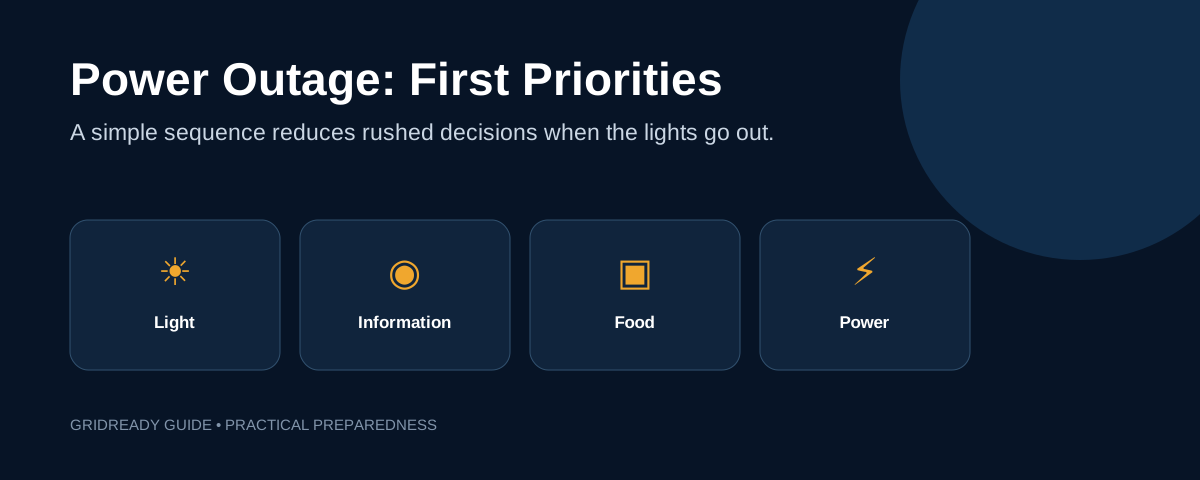
Build your outage plan around consequences, not gadgets
A useful blackout plan starts by asking what becomes unsafe or difficult when electricity disappears. Lighting is immediate, but refrigeration, indoor temperature, communications, water systems, medical equipment and electrically powered cooking can become more important as an outage stretches from hours into days.
Before an outage, list the devices and systems your household actually depends on. Mark which are essential, which are merely convenient, and which can be replaced by a non-electric method. That list becomes the basis for batteries, power banks, backup power and fuel planning.
The first 30 minutes
- Confirm whether the problem is limited to your home or is a wider outage.
- Switch to flashlights or battery lanterns and keep candles out of your default lighting plan.
- Keep refrigerator and freezer doors closed.
- Unplug sensitive equipment if restoration surges are a concern.
- Check on household members who rely on powered medical or accessibility equipment.
- Use a battery radio, utility alerts or a charged phone to establish what is happening.
Plan for three durations
| Duration | Main problems | Preparation focus |
|---|---|---|
| Several hours | Lighting, phones, internet, minor food-temperature loss | Lights, power banks, information and keeping cold-storage doors shut |
| Overnight to 24 hours | Refrigeration, heating/cooling, cooking, communications | Cold-food strategy, safe alternative cooking, thermal comfort and larger batteries |
| Multiple days | Fuel, water, sanitation, freezer contents, resupply and communications | Prioritized loads, stored essentials, neighborhood/family plan and safe backup power |
Safety basis: CDC advises keeping generators outdoors at least 20 feet from windows, doors and vents, and using battery-powered or battery-backup carbon-monoxide detectors. USDA guidance says an unopened refrigerator keeps food cold for about four hours; a full freezer for about 48 hours (about 24 hours if half full).
What to prepare before buying backup power
Write down the wattage and expected runtime of your truly essential loads. A phone and LED lantern require very little energy compared with an electric heater, kettle or conventional cooking appliance. This simple load inventory prevents a common mistake: buying power equipment first and deciding what it should run afterward.
Then build redundancy. A flashlight still works when the power station is depleted. Shelf-stable food still works when the refrigerator is warm. A paper contact list still works when a phone is unavailable. Resilience comes from having several modest options rather than expecting one device to solve every failure.